
A Efemeridade da Vida
Para onde vamos quando morremos? De que somos feitos? Qual o limite da efemeridade humana e de que modo os objetos artísticos que criamos são reflexo disso?
Com base nas questões acima colocadas, apresento “A Efemeridade da Vida”, peça em cerâmica representativa da fragilidade do ser humano.
Numa fase de perda e luto profundo, surge a necessidade de criar de forma livre e introspetiva de modo a materializar a dor causada pela morte, aliando-a à interpretação da obra “Natureza-morta” de Pieter Claesz.
Tal como o barro, somos matéria orgânica, pó e cinzas que se dissolvem no Universo e contaminam todo o ar que respiramos. Barro que se transforma e que tem a capacidade de se moldar, respondendo às necessidades de quem nele intervém.
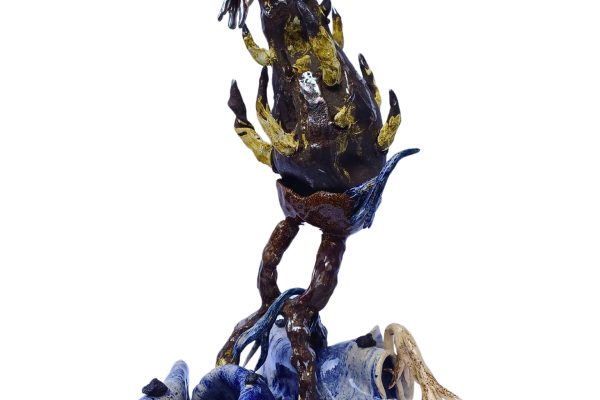
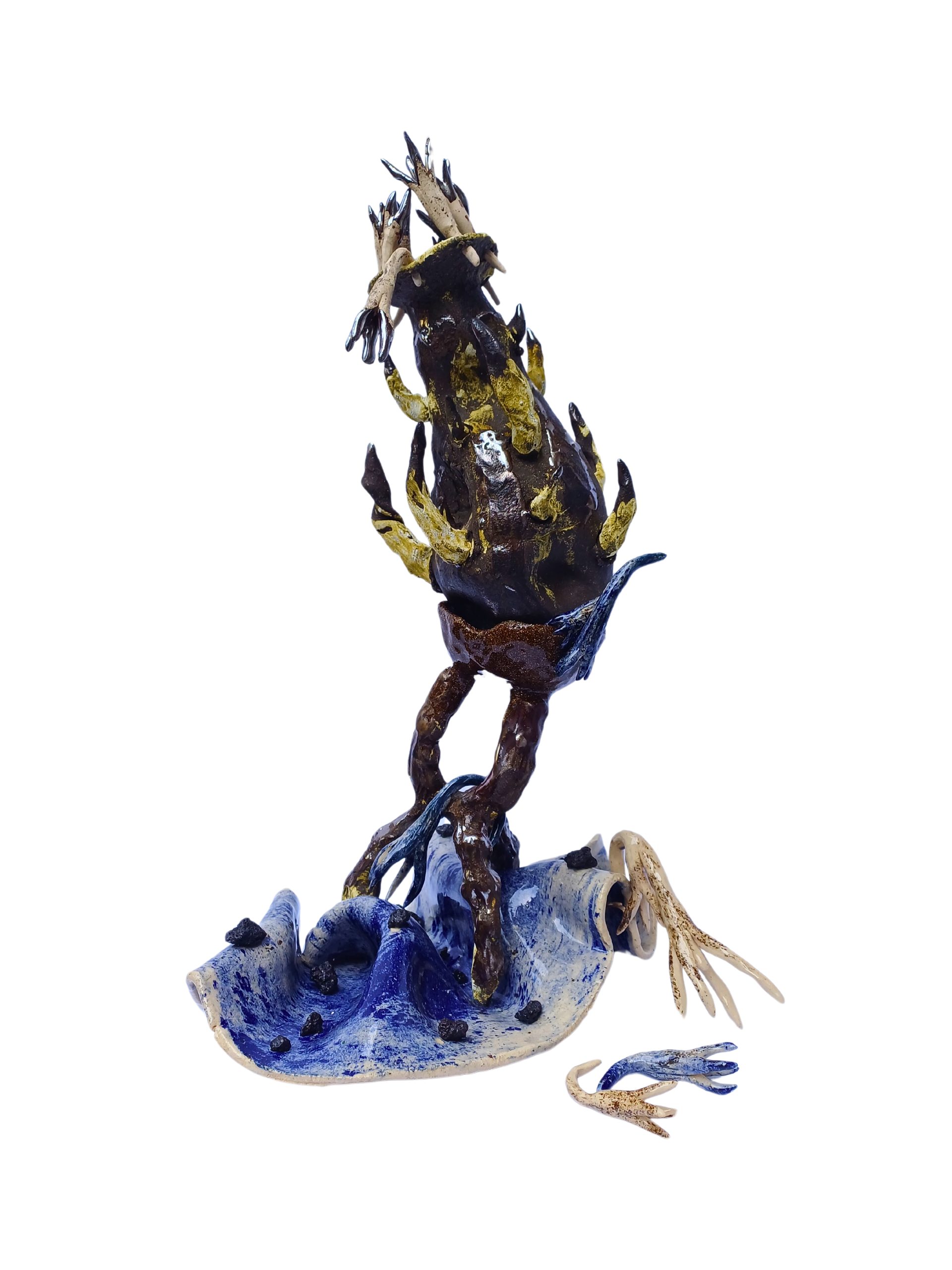
Neste sentido, a peça apresentada é composta por seis elementos distintos que, quando juntos, formam uma composição única e dinâmica, em equilíbrio permanente.
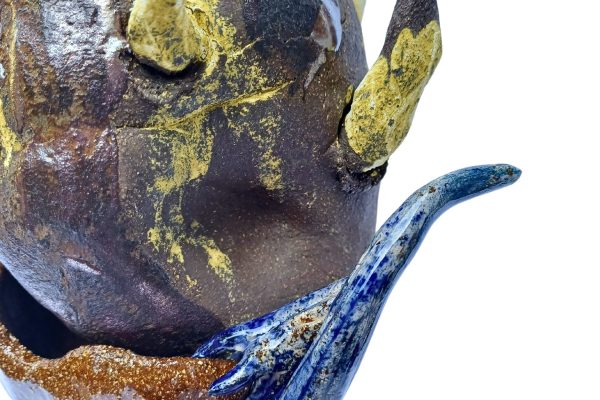
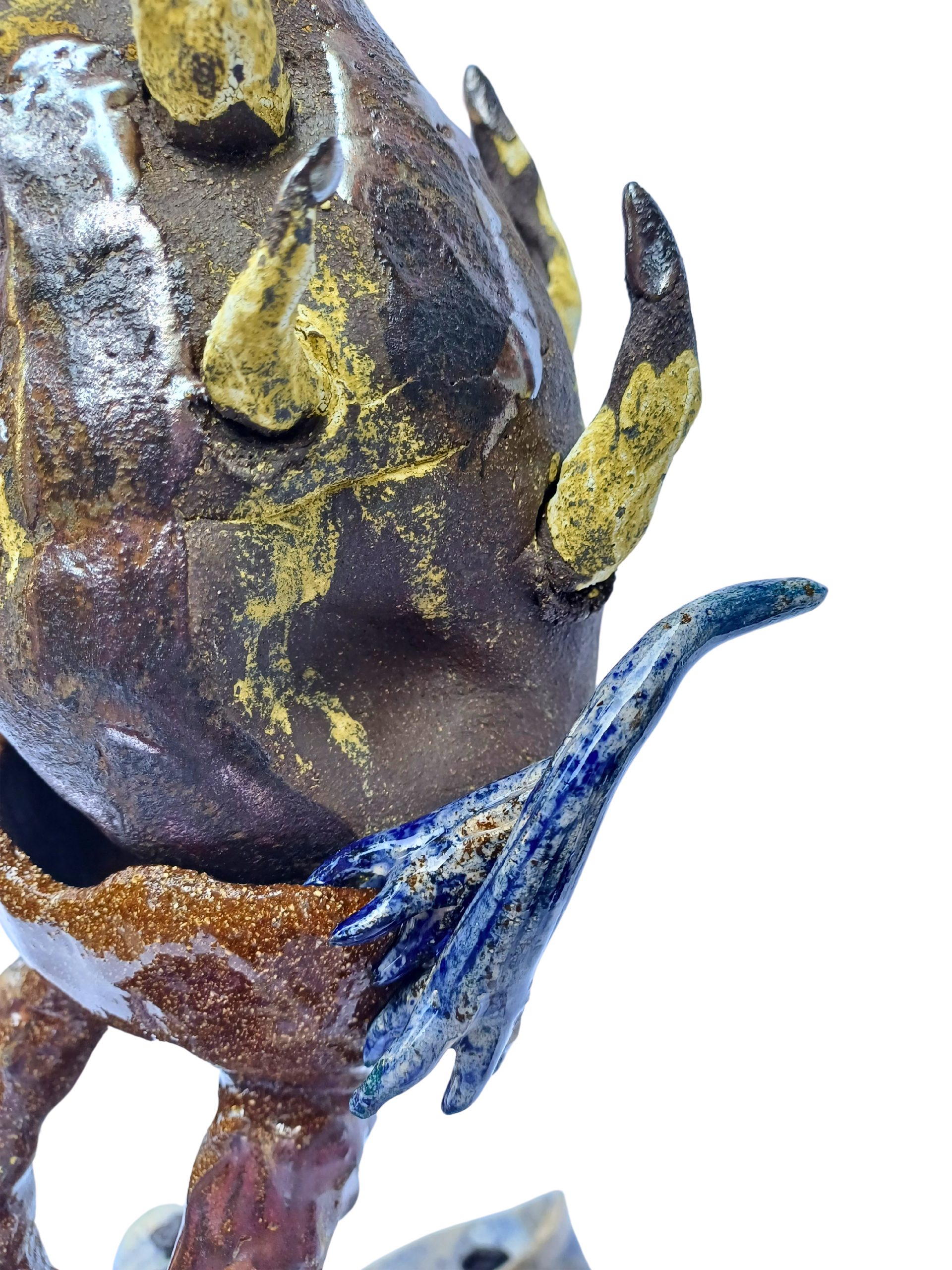
O elemento central, modelado em barro negro e com apontamentos metalizados, refere-se à interpretação dos recipientes metálicos presentes na obra de Claesz. Os espinhos presentes simulam a dor da perda, o craquelar da memória e as farpas causadas pela saudade.
O tecido representado na pintura é agora interpretado na cerâmica como sendo o elemento onde a restante peça encaixa, criando um contraste notório entre as diversas pastas cerâmicas usadas: enquanto que as peças em barro negro ganham na verticalidade e na textura, o “tecido” entra em contraposição e apresenta-se como horizontal, com pregas suaves e apontamentos de azul cobalto.
Apesar de a obra interpretada não ter quaisquer apontamentos deste azul, interpreto-o enquanto cor associada à tranquilidade do último sopro da vida. Somos seres cuja matéria se espalha no tempo e no espaço como a efemeridade da vida de uma borboleta.
As flores, tímidas e dispersas, lidas como segundo plano na obra interpretada, representam o lado frágil de uma sociedade atual que perdeu os seus valores e que, ignobilmente, se deixa moldar por mãos alheias.
Em suma, a peça apresentada é um manifesto palpável à singularidade da vida e à aceitação da morte como algo transversal a todos os seres. O futuro é instável, vago e condensado num sopro.
grés branco, grés negro, pedra vulcânica, pigmento cobalto, óxidos e vidrados
English
A Efemeridade da Vida
Where do we go when we die? What are we made of? What is the limit of human ephemerality and how do the artistic objects we create reflect this?
Based on the questions above, I present “A Efemeridade da Vida”, a ceramic piece that represents the fragility of human beings.
In a time of loss and deep mourning, the need arises to create freely and introspectively in order to materialize the pain caused by death, combining it with the interpretation of Pieter Claesz’s work “Natureza-morta”.
Just like clay, we are organic matter, dust and ashes that dissolve in the Universe and contaminate all the air we breathe. Clay that transforms and has the ability to mold itself, responding to the needs of those who intervene in it.
In this sense, the piece presented is composed of six distinct elements that, when together, form a unique and dynamic composition, in permanent balance.
The central element, modelled in black clay and with metallic details, refers to the interpretation of the metal containers present in Claesz’s work. The thorns present simulate the pain of loss, the crackling of memory and the splinters caused by longing.
The fabric represented in the painting is now interpreted in the ceramic as being the element in which the rest of the piece fits, creating a notable contrast between the different ceramic pastes used: while the pieces in black clay gain in verticality and texture, the “fabric” enters in contrast and presents itself as horizontal, with soft folds and touches of cobalt blue.
Although the interpreted work does not have any touches of this blue, I interpret it as a colour associated with the tranquillity of the last breath of life. We are beings whose matter spreads through time and space like the ephemerality of a butterfly’s life. The shy and scattered flowers, seen as a background in the work being performed, represent the fragile side of a current society that has lost its values and that, ignobly, allows itself to be shaped by the hands of others.
In short, the piece presented is a tangible manifesto to the singularity of life and the acceptance of death as something that affects all beings. The future is unstable, vague and condensed into a breath.
white stoneware, black stoneware, volcanic stone, cobalt pigment, oxides and glaze
Ana Pinho
Ana Pinho, 1996, Porto
Licenciada em Escultura pela Faculdade de Belas Artes, Porto, o seu trabalho artístico centra-se no corpo feminino, híbrido e disforme, fora das regras académicas. Atualmente foca-se na cerâmica como meio de criação e exploração dos volumes e texturas como manifesto e empoderamento do ser feminino.
É fundadora da Oficina Cobalto, espaço de desenvolvimento criativo entre artistas, com residências, exposições, aulas e workshops.
https://www.instagram.com/anapinho.ceramic/
English
Ana Pinho, 1996, Porto
Graduated in Sculpture from the Faculty of Fine Arts, Porto, her artistic work focuses on the female body, hybrid and deformed, outside of academic rules. She currently focuses on ceramics as a means of creation and exploration of volumes and textures as a manifesto and empowerment of the female being.
She is the founder of Oficina Cobalto, a space for creative development among artists, with residencies, exhibitions, classes and workshops.
https://www.instagram.com/anapinho.ceramic/
Ó! Cerâmica
Rua de Adolfo Casais Monteiro, 61
Land Ceramics
Rua do Rosário 294