
Natureza-morta em estado líquido
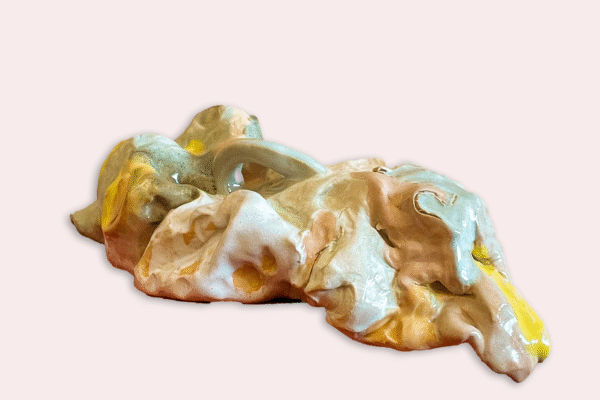
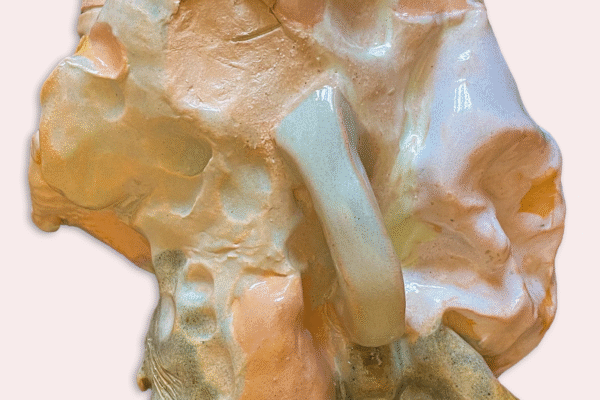
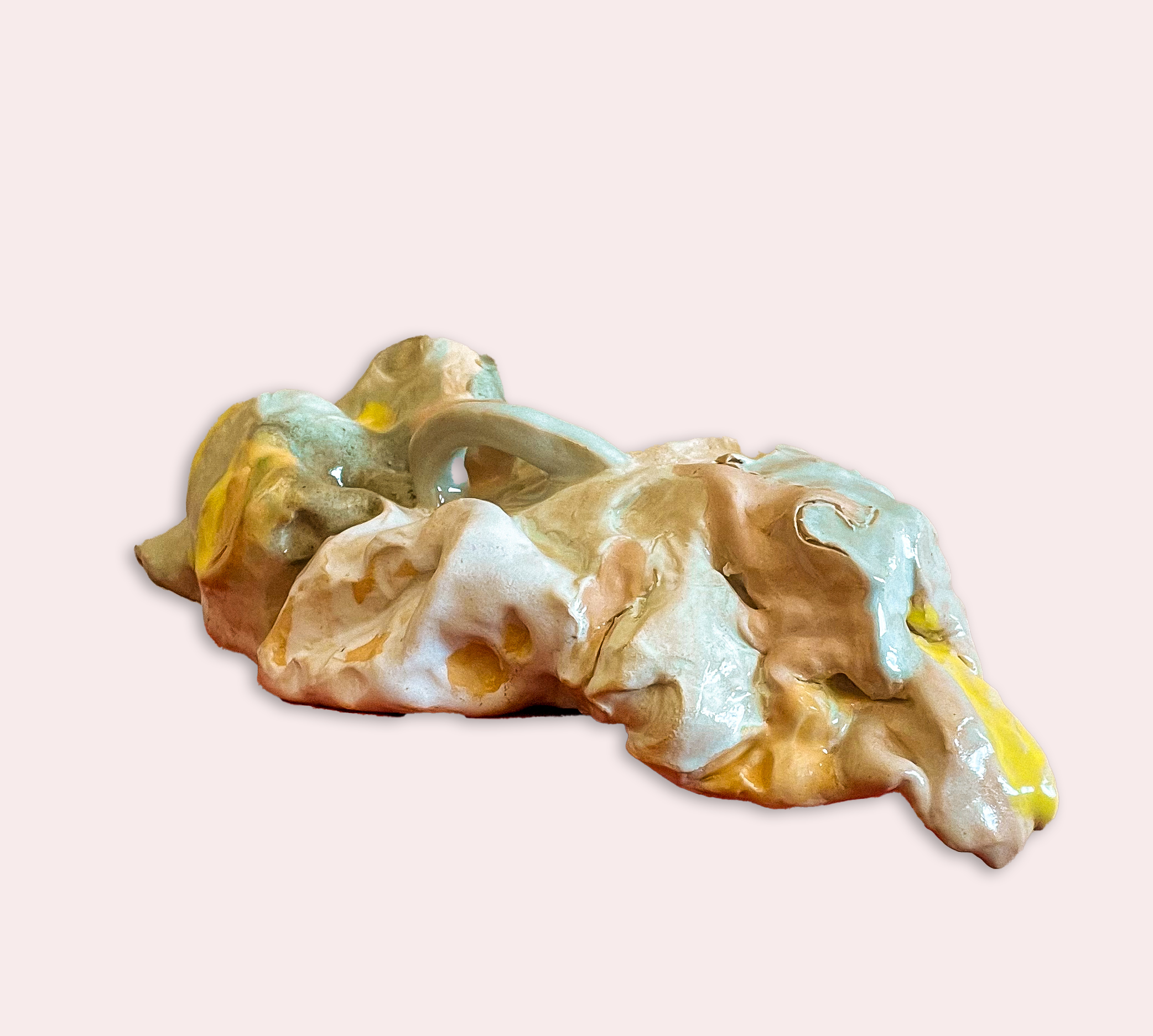
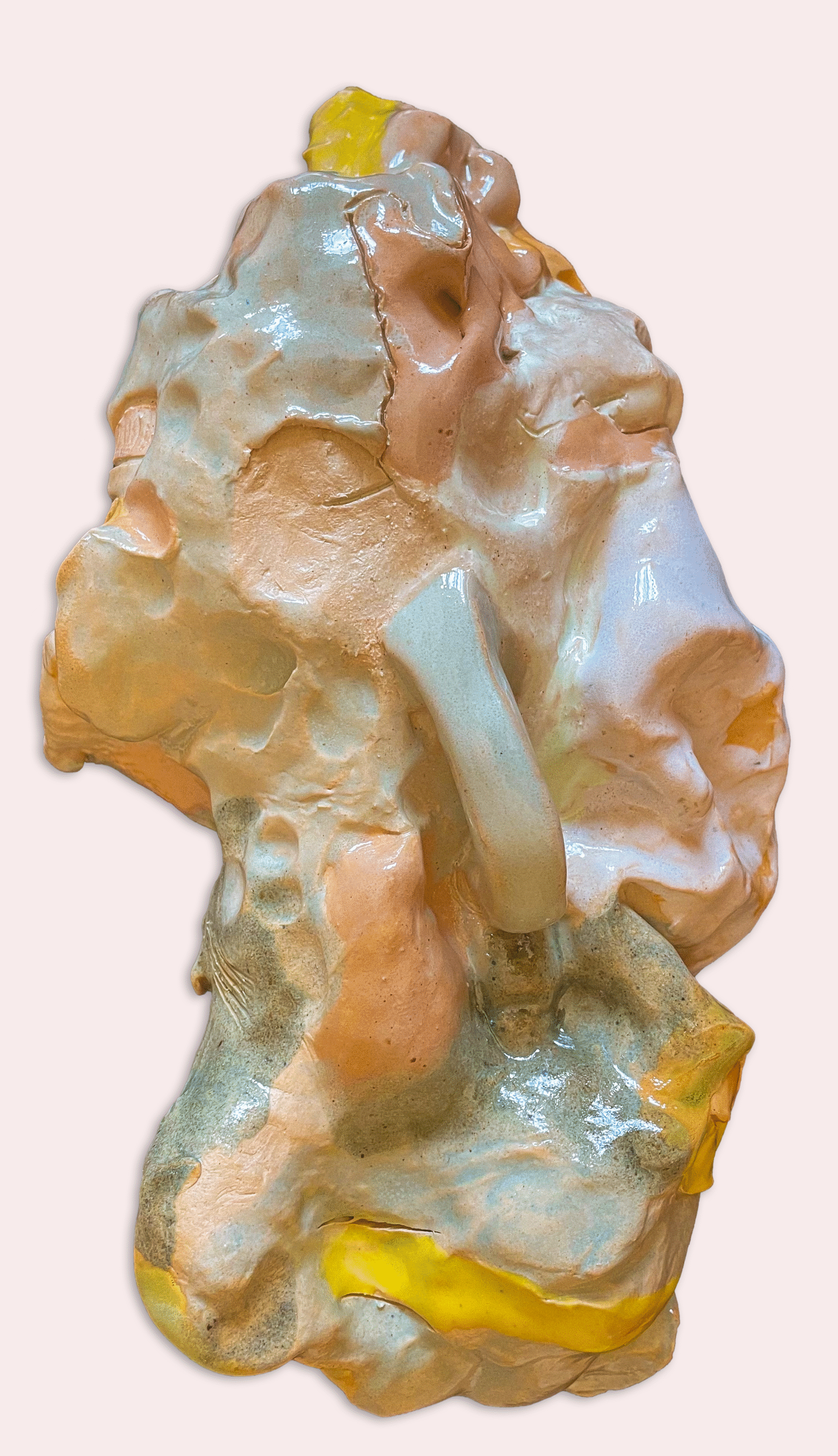
Esta peça cerâmica é uma releitura livre e deformada da pintura Natureza-morta (1645), de Pieter Claesz. Longe de reproduzir a imagem original, a obra parte do seu espírito para submetê-la a um processo de dissolução e transformação material. Aqui, a natureza-morta começa a derreter, a escorrer pelas bordas, como se o tempo — ou o juízo social — a tivesse transbordado.
A matéria, antes sólida e contida nos limites da pintura barroca, transforma-se agora em um corpo líquido. Os objetos já não mantêm a sua forma nem sua hierarquia: taças, frutas, metais e carnes fundem-se em uma massa única, viscosa e vidrada, onde os contornos se confundem. O banquete de uma elite desaparecida apresenta-se em estado de ruína — são os restos, a memória física de um excesso que já não se sustenta.
Há uma crítica social nesse processo de dissolução: aquilo que foi símbolo de status e poder degrada-se, apodrece, torna-se instável. As classes altas, representadas na pintura original pela opulência de seus objetos, aqui tornam-se uma entidade líquida, incapaz de sustentar sua própria forma. O que era sólido se desfaz. Aquilo que foi imagem de permanência e riqueza agora escapa por entre os dedos do espectador.
O tempo atua como agente principal: conserva as cores, mas altera a matéria. As formas se desfazem, os alimentos mudam de estado, desaparecem. Nesta nova versão, todos os elementos já não convivem em harmonia, mas sim num caos orgânico: deixaram de ser múltiplos para se tornarem um só.
Hoje, em meio a um presente marcado por conflitos globais — o genocídio em Gaza, a guerra na Ucrânia, o avanço das extremas direitas, a violência de Estado e a desigualdade sistêmica —, esta obra se apresenta como uma metáfora do nosso colapso partilhado. O banquete terminou, mas continuamos a habitar seus resíduos. A matéria não apenas se liquefaz: ela acusa, aponta, transforma-se em testemunho. Esta natureza-morta em estado líquido é ao mesmo tempo ruína, espelho e advertência.
cerâmica modelada à mão em barro, esmaltes vidrados
17 x 29 x 10
English
Still Life in a Liquid State
This ceramic piece is a free and distorted reinterpretation of Pieter Claesz’s Still Life (1645). Far from reproducing the original image, the work draws from its spirit to subject it to a process of dissolution and material transformation. Here, the still life begins to melt, slipping off the edges as if time—or social judgment—had overflowed it.
The matter, once solid and contained within the boundaries of the Baroque painting, now becomes a liquid body. Objects no longer retain their form or hierarchy: glasses, fruits, metals, and meats merge into a single viscous, glazed mass where contours blur. The banquet of a vanished elite is presented in a state of ruin — the remains, the physical memory of an excess that no longer holds.
There is a social critique in this dissolution: what once symbolized status and power degrades, rots, and becomes unstable. The upper classes, represented in the original painting by the opulence of their objects, here become a liquid entity unable to sustain their own form. What was solid dissolves. What was an image of permanence and wealth now slips through the viewer’s fingers.
Time acts as the main agent: it preserves color but alters matter. Forms blur, foods change state, and disappear. In this new version, all elements no longer coexist in harmony but in an organic chaos: they have ceased to be multiple to become one.
Today, amid a present marked by global conflicts — the genocide in Gaza, the war in Ukraine, the rise of far-right extremism, state violence, and systemic inequality — this work presents itself as a metaphor for our shared collapse. The banquet has ended, but we continue to inhabit its remains. Matter not only liquefies: it accuses, points, and transforms into testimony. This still life in a liquid state is at once ruin, mirror, and warning.
hand-modelled ceramic in clay, glazed enamels
17 x 29 x 10
Créditos Fotografias | Photography Credits: @itrynottothink
Noemí Díaz Patiño
Noemí Díaz Patiño é Diretora de Arte e criativa inquieta, atuando em moda, fotografia e design. Faz parte da equipa global de comércio eletrónico da adidas, elevando a imagem nas categorias principais como Originals, Futebol e Running. Com mestrado em Marketing de Moda e formação em Design Gráfico, colaborou com marcas como Coca-Cola, Inditex e Bimba y Lola. Explora também cerâmica, DJing e é co-fundadora do Espacio Nido, primeiro espaço criativo de coworking da Galiza.
https://www.itrynottothink.com
English
Noemí Díaz Patiño is an Art Director and restless creative working across fashion, photography, and design. She is part of adidas’s global e-commerce team, elevating imagery across key categories like Originals, Football, and Running. With a Master’s in Fashion Marketing and a Graphic Design background, she has collaborated with brands like Coca-Cola, Inditex, and Bimba y Lola. She also explores ceramics, DJing, and co-founded Espacio Nido, Galicia’s first creative coworking space.
https://www.itrynottothink.com