
Metamorfose Silenciosa
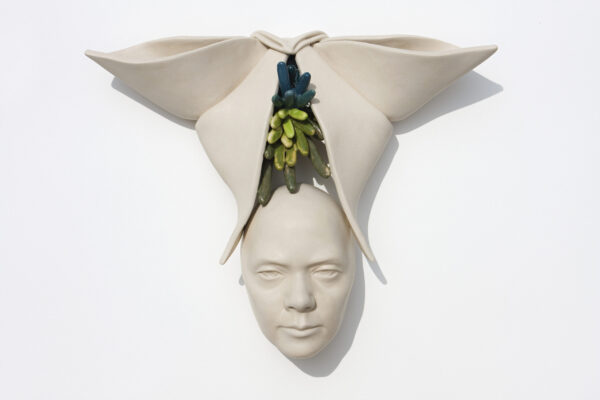
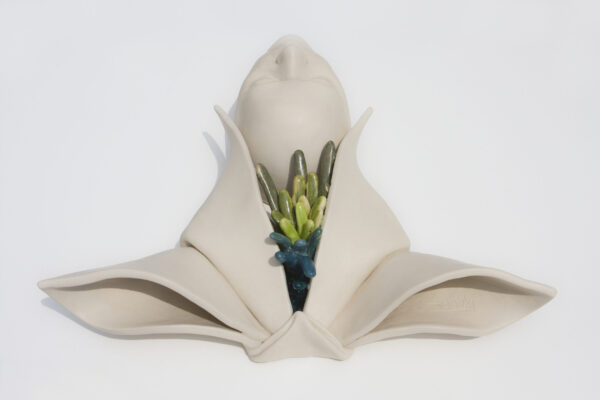
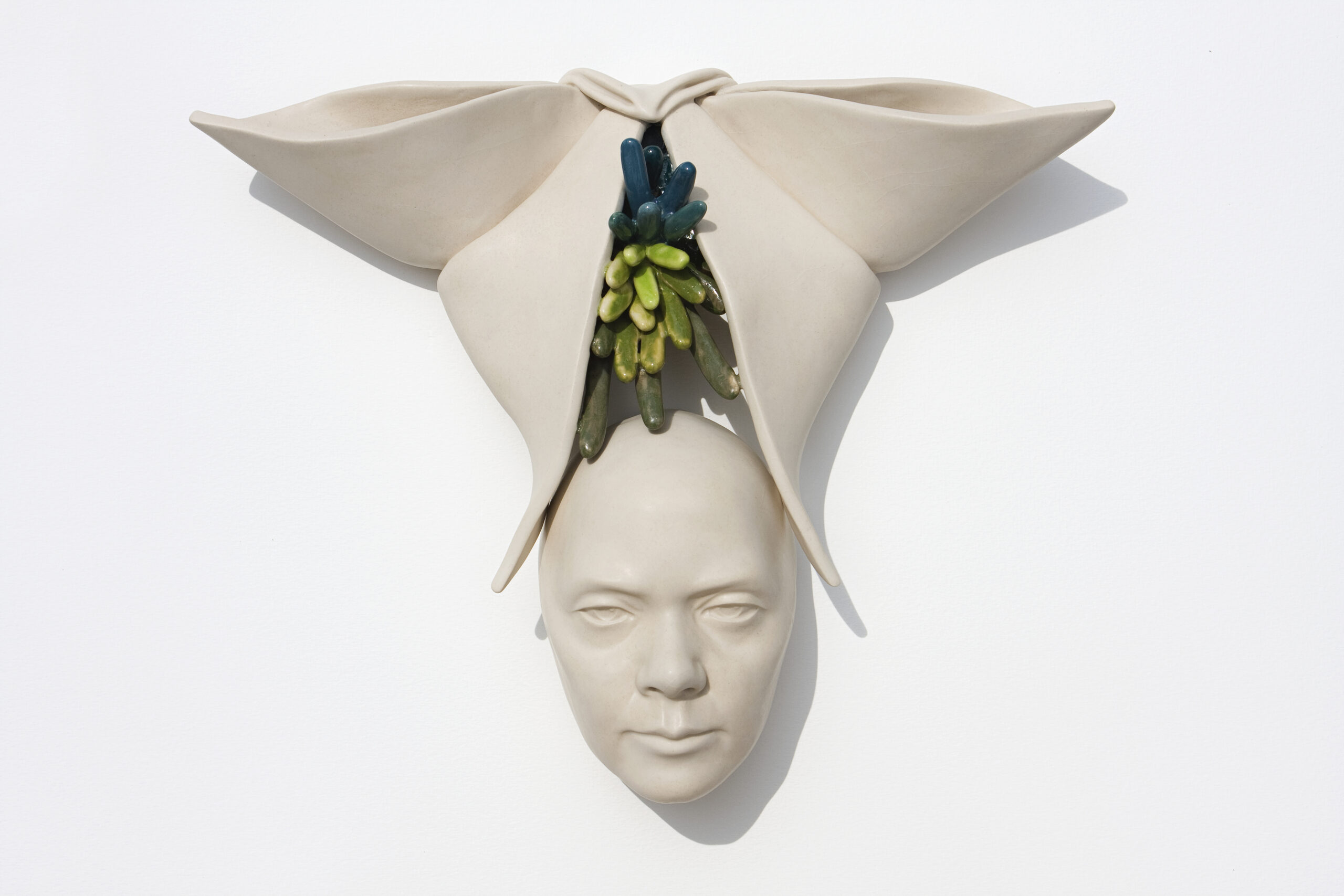
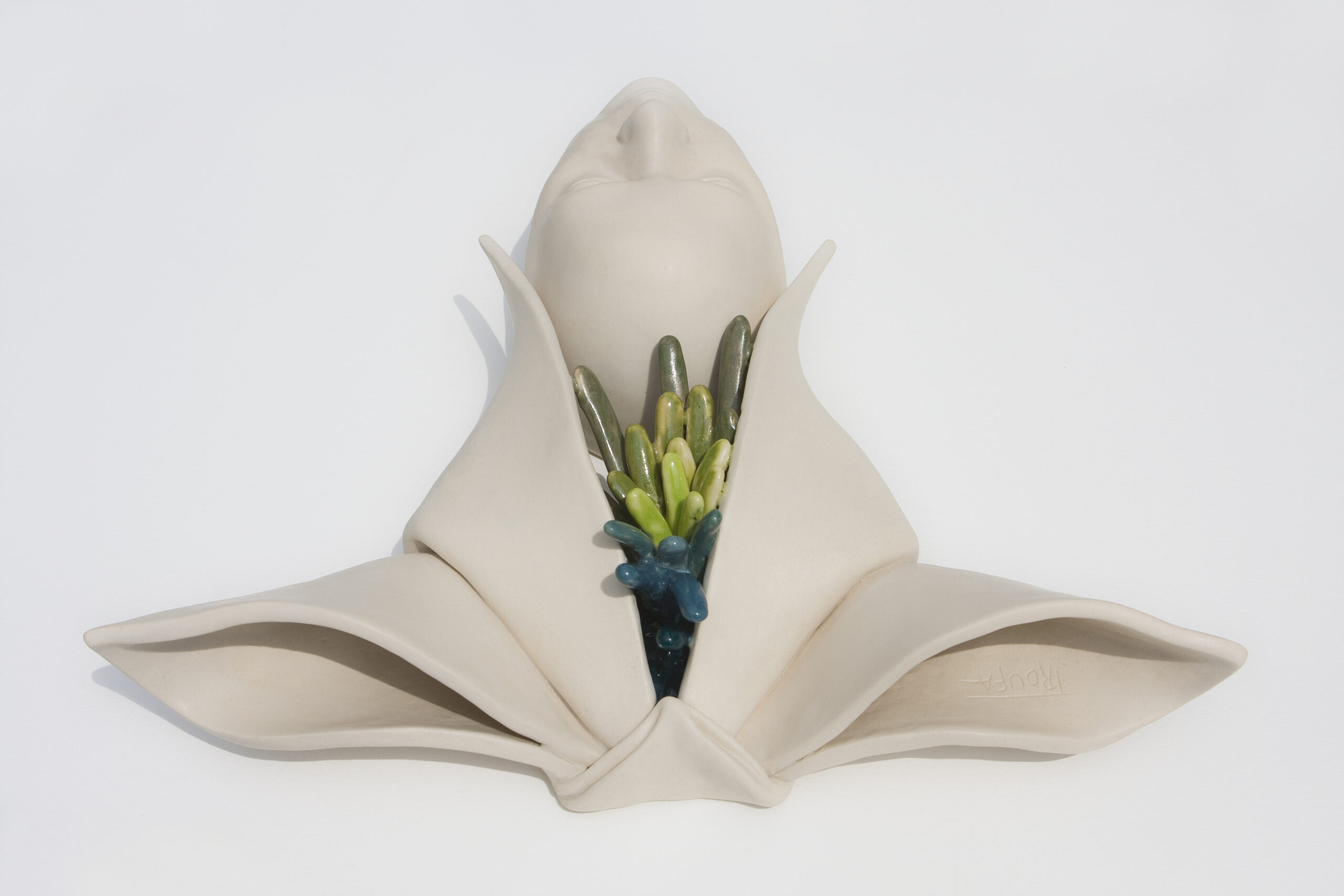
A peça de cerâmica apresentada é uma escultura contemporânea marcada por um rosto estilizado de expressão serena, cuidadosamente modelado à mão. O trabalho manual permitiu definir traços delicados e volumes harmoniosos, conferindo à obra uma presença introspetiva e silenciosa. Sobre o topo do rosto, destaca-se uma borboleta inspirada na técnica do origami, construída a partir de lastras de argila. Esta borboleta, que funciona como uma espécie de coroa, “borboleta-coroa”, evidencia o diálogo entre a tradição cerâmica e a linguagem do origami: as suas formas angulosas, simétricas e dobradas remetem diretamente à arte japonesa de transformar superfícies planas em estruturas tridimensionais sofisticadas.
A peça explora o contraste entre a fragilidade visual das formas inspiradas no origami e a solidez da cerâmica, demonstrando como o rigor das dobras pode ser transposto para um material tradicionalmente rígido, conferindo-lhe dinamismo e expressividade. A “borboleta-coroa” acrescenta ainda um simbolismo de transformação, leveza e esperança, reforçando a ideia de destaque e elevação do rosto.
No centro da composição existem elementos vegetais em tons frios de verde e azul, também modelados manualmente que evocam vitalidade, renovação e uma ligação profunda à natureza. As grandes formas laterais brancas, criadas a partir de lastras, envolvem a peça com elegância e ampliam a sua dimensão escultórica. O acabamento mate e a paleta cromática restrita, dominada pelo branco e pelos tons frios, reforçam o caráter minimalista e contemplativo da obra, convidando à introspeção.
Esta cerâmica partilha pontos em comum com a pintura Natureza Morta (1645) de Pieter Claesz em que ambas as obras exploram uma atmosfera fria e silenciosa, marcada pela contenção cromática e pela valorização das texturas e volumes. Tal como na pintura de Claesz, onde a luz suave e as texturas minuciosas criam uma sensação de tempo suspenso e reflexão, a peça de cerâmica utiliza o branco mate e a integração de elementos naturais para sugerir serenidade, transformação e contemplação.
Apesar das diferenças de época, técnica e função, tanto esta peça de cerâmica como a pintura de Pieter Claesz exploram o silêncio, a transitoriedade, a relação entre o humano e a natureza, e o diálogo entre tradição e contemporaneidade, convidando o observador à contemplação e à reflexão sobre o tempo e a transformação.
faiança, vidrado transparente mate e engobes
35 x 40 x 11 cm
English
Silent Metamorphosis
The ceramic piece presented is a contemporary sculpture marked by a stylized face with a serene expression, carefully modeled by hand. The manual work allowed for the definition of delicate features and harmonious volumes, giving the work an introspective and silent presence. Above the face, a butterfly inspired by the origami technique stands out, constructed from clay slabs. This butterfly, which functions as a kind of crown, a “butterfly-crown”, highlights the dialogue between the ceramic tradition and the language of origami: its angular, symmetrical and folded shapes refer directly to the Japanese art of transforming flat surfaces into sophisticated three-dimensional structures.
The piece explores the contrast between the visual fragility of origami-inspired shapes and the solidity of ceramics, demonstrating how the rigor of folds can be transposed onto a traditionally rigid material, giving it dynamism and expressiveness. The “butterfly-crown” also adds a symbolism of transformation, lightness and hope, reinforcing the idea of highlighting and elevating the face.
In the center of the composition are plant elements in cool tones of green and blue, also modeled manually, which evoke vitality, renewal and a deep connection to nature. The large white lateral shapes, created from slabs, elegantly surround the piece and expand its sculptural dimension. The matte finish and the restricted color palette, dominated by white and cool tones, reinforce the minimalist and contemplative character of the work, inviting introspection.
This ceramic piece shares similarities with Pieter Claesz’s painting Still Life (1645) in that both works explore a cold and silent atmosphere, marked by chromatic restraint and the valorization of textures and volumes. As in Claesz’s painting, where soft light and detailed textures create a sense of suspended time and reflection, the ceramic piece uses matte white and the integration of natural elements to suggest serenity, transformation and contemplation.
Despite the differences in period, technique and function, both this ceramic piece and Pieter Claesz’s painting explore silence, transience, the relationship between humans and nature, and the dialogue between tradition and contemporaneity, inviting the observer to contemplate and reflect on time and transformation.
faience, matte glaze and engobe
35 x 40 x 11 cm
Cristina Troufa
Cristina Troufa nasceu no Porto em 1974. Em 1998 conclui a Licenciatura em Pintura na Faculdade de Belas Artes da Universidade do Porto e em 2012 o Mestrado em Pintura na mesma Faculdade.
Desde 1995 que participa em exposições coletivas e individuais em Portugal, Itália, Espanha, Austrália, Canadá, Dinamarca, Escandinávia, Taiwan, França, Inglaterra e EUA.
É referenciada e entrevistada em vários meios de comunicação social, dentro e fora de Portugal e o seu trabalho ilustra a capa e miolo de revistas e livros de autores nacionais e internacionais. A sua obra está presente em coleções de arte de instituições públicas e privadas.
https://www.instagram.com/cristina_troufa/
English
Cristina Troufa was born in Porto in 1974. In 1998, she completed her degree in Painting at the Faculty of Fine Arts of the University of Porto and in 2012, her Master’s degree in Painting at the same Faculty.
Since 1995, she has participated in group and solo exhibitions in Portugal, Italy, Spain, Australia, Canada, Denmark, Scandinavia, Taiwan, France, England and the USA.
She has been referenced and interviewed in various media outlets, both in Portugal and abroad, and his work has graced the covers of magazines and books by national and international authors. Her work is part of art collections in public and private institutions.
https://www.instagram.com/cristina_troufa/