
A última ceia
Inspirada nas naturezas-mortas de Pieter Claesz (1645) — uma das suas composições de mesas parcialmente desarrumadas, onde objetos abandonados sugerem a passagem do tempo ou a interrupção de uma refeição — a obra proposta atualiza essa tradição pictórica para um contexto de urgência política e humana.
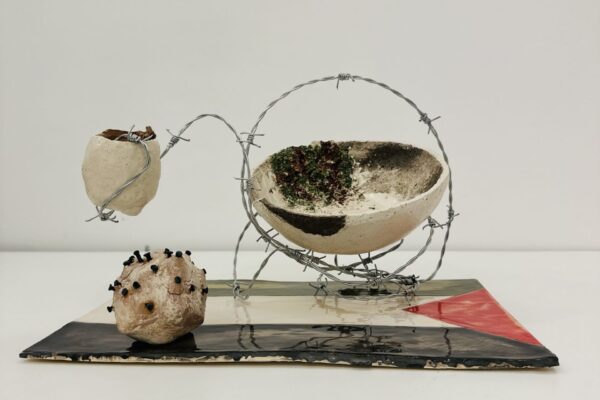
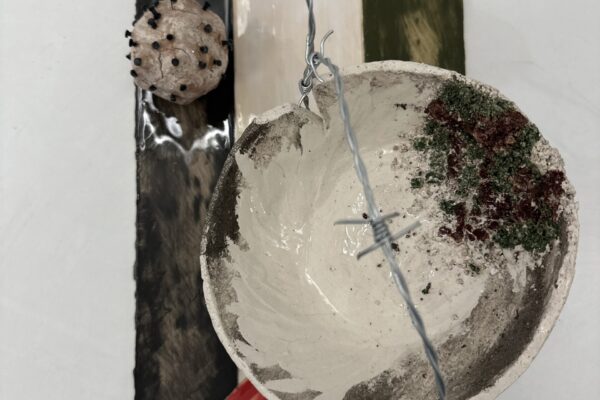
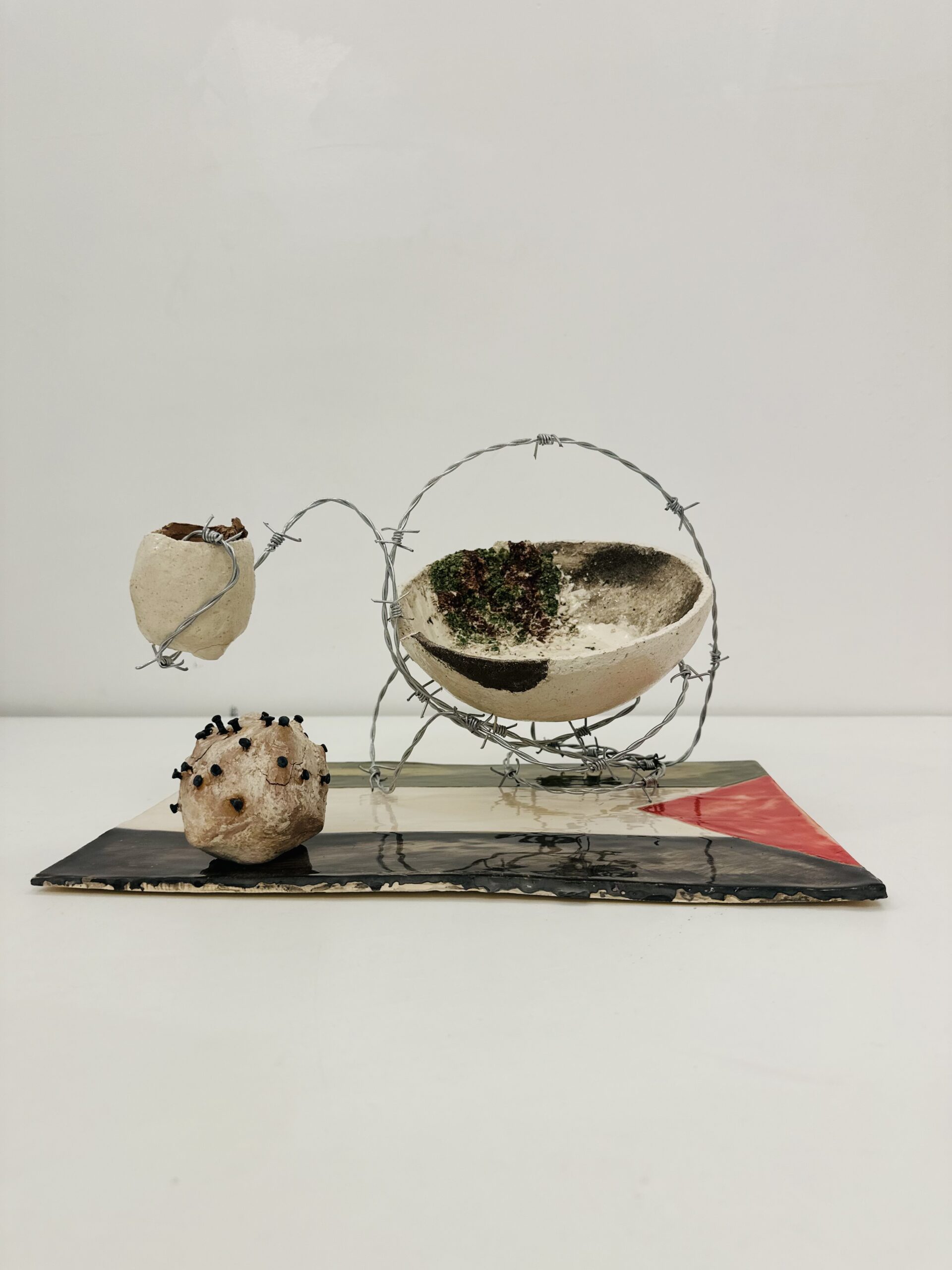
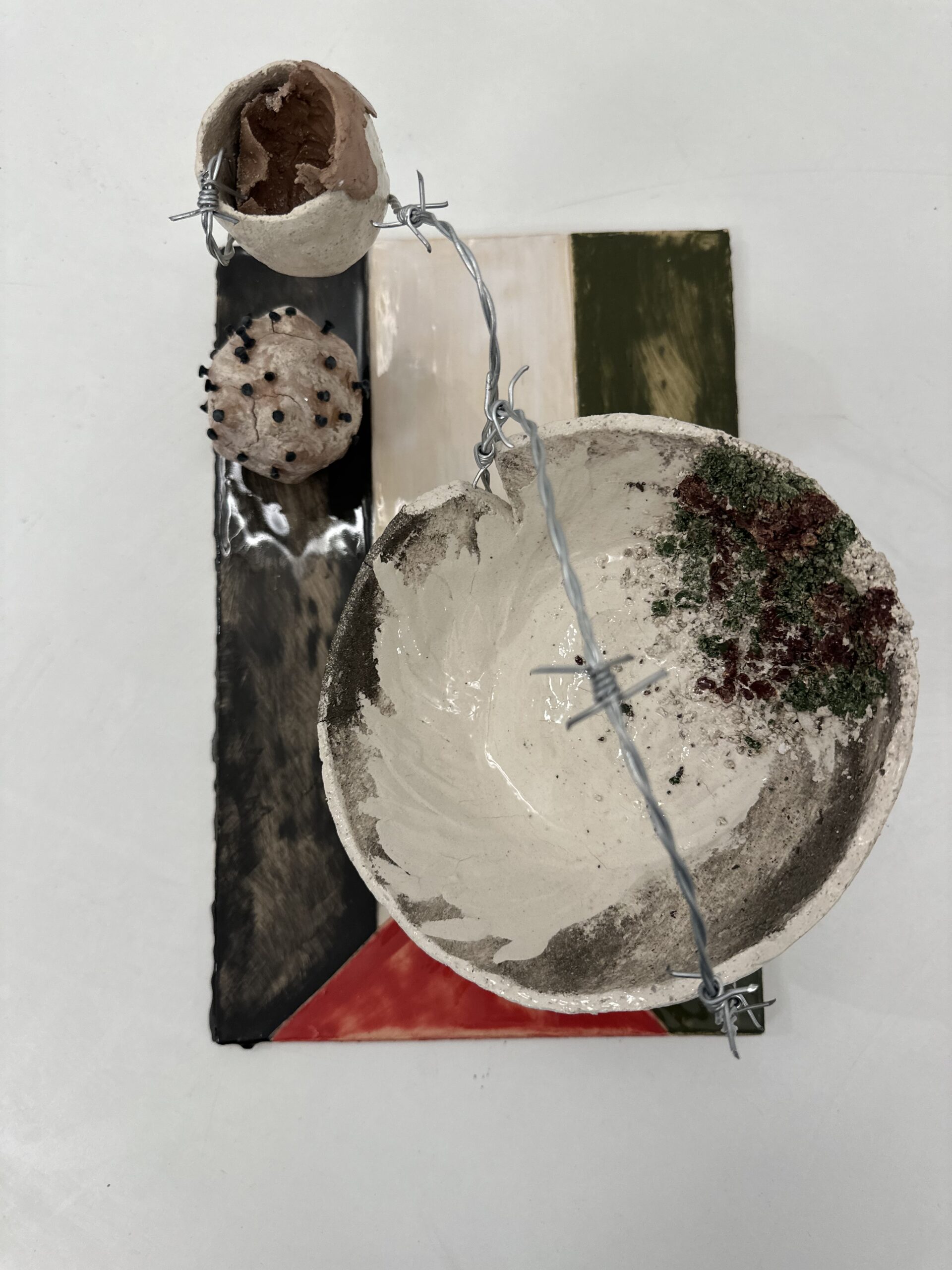
A obra representa a refeição abruptamente interrompida de uma família palestina, surpreendida pela força da guerra. O tabuleiro-bandeira serve como base e cenário, como símbolo de identidade, pertença e resistência. Nascendo dele, o arame farpado delimita o espaço e evoca o cerco, a opressão e a impossibilidade de fuga. Sobre esse tabuleiro repousam três elementos que remetem para uma natureza-morta contemporânea carregada de dor: uma granada, sinal direto da destruição; um copo com líquido solidificado em suspensão, congelando o tempo no momento da interrupção; e um prato com restos de comida, memória de um quotidiano violentamente desfeito.
Ao reinterpretar a estética das naturezas-mortas barrocas — associadas à fugacidade da vida, ao luxo efémero e à reflexão sobre a morte — a obra apresentada reconfigura essa simbologia para abordar a realidade brutal da vida sob ocupação. A efemeridade aqui não é apenas filosófica, mas concreta: a vida pode ser interrompida num instante. A mesa posta pode transforma-se em cinzas e, quando a granada cai sobre o tabuleiro-bandeira faz levantar o copo e o prato, como se esse momento de suspensão, representasse, em si mesmo, o instante de mudança.
O eco do genocídio silencioso que se perpetua através da fome e da sede — estratégias de extermínio tão cruéis quanto as armas —, denuncia a violência que atinge não apenas corpos, mas também gestos quotidianos e direitos básicos à sobrevivência.
Em diálogo com o conceito de vanitas, onde o que é terreno e material simboliza a vaidade e a transitoriedade da vida, esta obra pretende revelar um “vazio” ainda mais profundo diante da urgência da sobrevivência.
A cerâmica, enquanto material que equilibra fragilidade e permanência, transforma-se em testemunha silenciosa de um trauma coletivo, e a obra, como um todo, ergue-se como um memorial poético àquilo que foi perdido, e àquilo que ainda resiste.
É também um manifesto, pois cada gesto que denuncia o que acontece na Palestina importa. Toda a oportunidade de comunicar —artística ou politicamente —, de lembrar e de resistir é urgente para manter viva a memória, fortalecer a denúncia e cultivar a solidariedade frente ao sofrimento resultante desta ferida imensa na história da humanidade.
diferentes tipos de grés, engobe, vidrado, pregos de aço e arame
36 x 24 x 30 cm
English
The last supper
Inspired by the still lifes of Pieter Claesz (1645) — one of his compositions featuring partially disordered tables, where abandoned objects suggest the passage of time or the interruption of a meal — the proposed work updates this pictorial tradition for a context of political and human urgency.
The piece represents the meal abruptly interrupted of a Palestinian family, caught off guard by the force of war. The tray-flag serves as both base and backdrop, symbolising identity, belonging, and resistance. Emerging from it, barbed wire marks the perimeter, evoking siege, oppression, and the impossibility of escape.
Upon this tray rest three elements that evoke a contemporary still life charged with pain: a grenade, a direct sign of destruction; a glass containing a suspended, solidified liquid — freezing time at the moment of interruption; and a plate with food remnants, a memory of daily life violently shattered.
By reinterpreting the aesthetics of Baroque still lifes — traditionally associated with the fleeting nature of life, ephemeral luxury, and reflection on death — the work reconfigures this symbolism to address the brutal reality of life under occupation. Here, ephemerality is not merely philosophical but concrete: life can be interrupted in an instant. A table once set can turn to ashes. And when the grenade falls upon the tray-flag, it lifts the glass and plate as if that moment of suspension itself marked the instant of transformation.
The echo of silent genocide perpetuated through hunger and thirst — strategies of extermination as cruel as weapons — denounces a violence that affects not only bodies, but also everyday gestures and basic rights to survival.
In dialogue with the concept of vanitas, where the material and the earthly symbolise vanity and the transience of life, this work seeks to reveal an even deeper void in the face of the urgency of survival.
Ceramic — a material that balances fragility and permanence — becomes a silent witness to collective trauma, and the work as a whole rises as a poetic memorial to what has been lost, and to what still endures.
It is also a manifesto, for every gesture that denounces what is happening in Palestine matters. Every opportunity to communicate — artistically or politically — to remember and to resist, is urgent in keeping memory alive, strengthening denunciation, and cultivating solidarity in the face of the suffering caused by this immense wound in the history of humanity.
different types of stoneware, engobe, glaze, steel nails and wire
36 x 24 x 30 cm
Marta Almendra
Marta Freitas Almendra. Lic. em Psicologia e em Teatro. Mestrado e Doutoramento em Ciências Cognitivas. Ceramista, encenadora, dramaturga e atriz. Desde 2019 que se interessa por cerâmica, tendo feito várias formações. Fez o curso “4 Weeks Immersive Creative Training”, Barcelona, com a premida artista Chisato Kuroki, de técnicas japonesas e raku. Em 2024 abre o Estúdio/Loja/Galeria Land Ceramics. Lança a MÀ Cerâmica em Set’24. Foi co-curadora de “É só Barro: 1ªEd. de Ciclo de Cerâmica”. Está a desenvolver o projeto LandMade, com a artista Ana Veríssimo, que une cerâmica e croché.
English
Marta Freitas Almendra. Degrees: Psychology/Theatre. Master’s & PhD: Cognitive Sciences. Ceramicist, director, playwright, actress. Has been interested in ceramics since2019, completing several courses. Took the “4Weeks Immersive Creative Training” course in BCN, with the award-winning artist Chisato Kuroki, on japanese & raku techniques. In2024, opened Land Ceramics Studio/Gallery. Created MÀ Cerâmica inSep’24. Was co-curator of “É só Barro: 1ªEd. de Ciclo de Cerâmica”. Is developing LandMade project, with the artist Ana Veríssimo, which combines ceramics and crochet.