
Ascensão
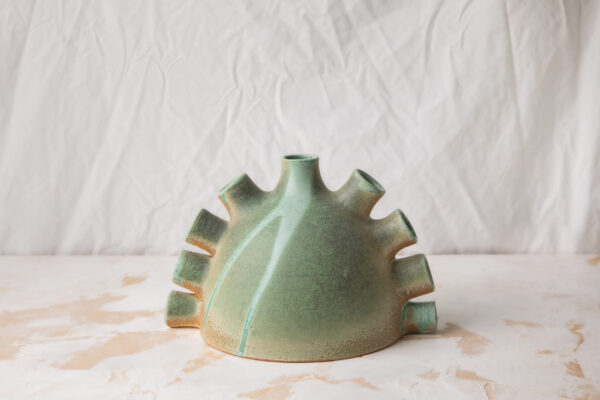
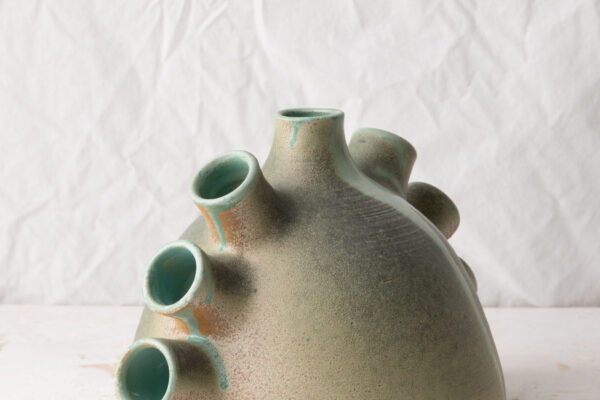
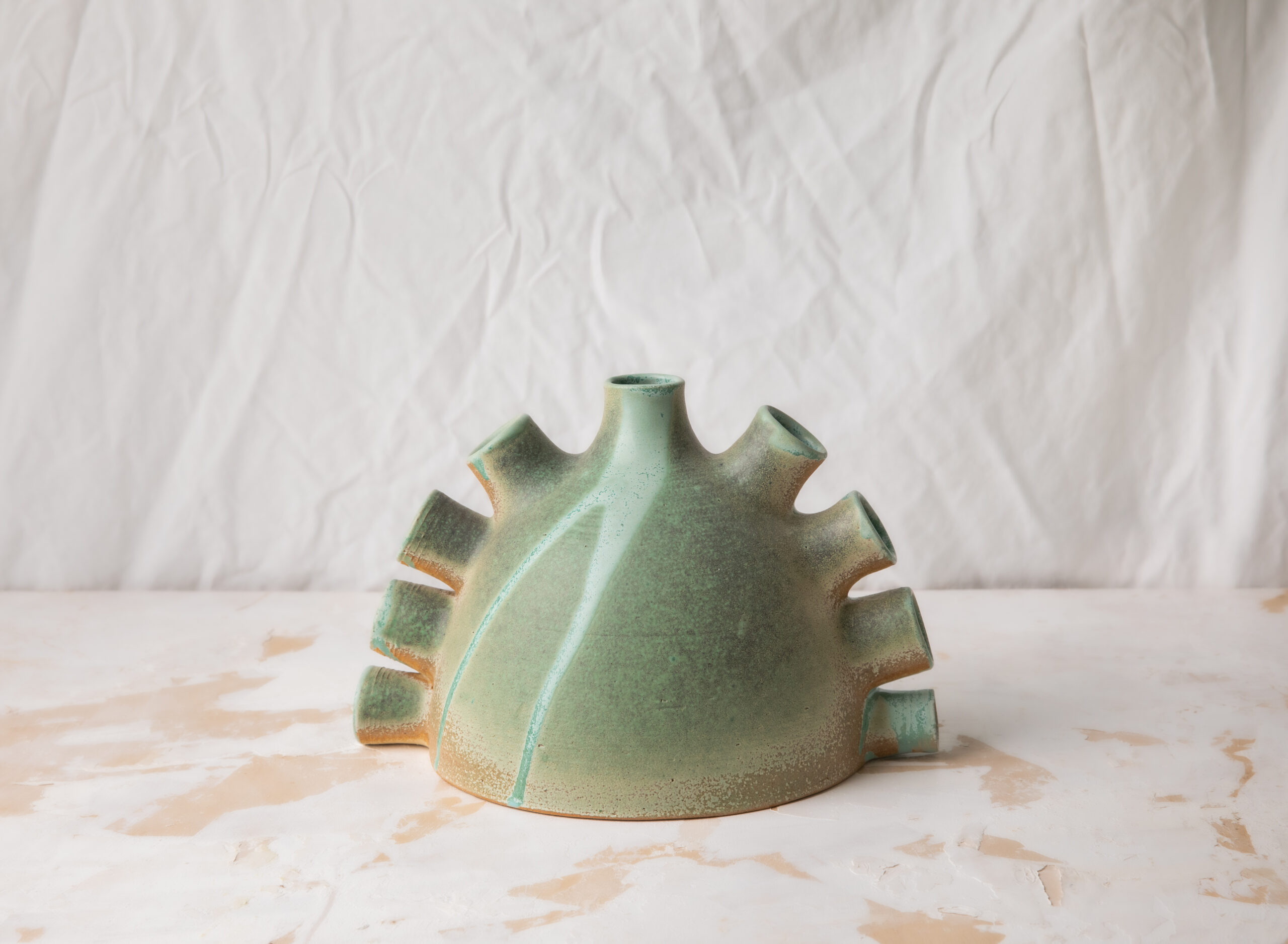
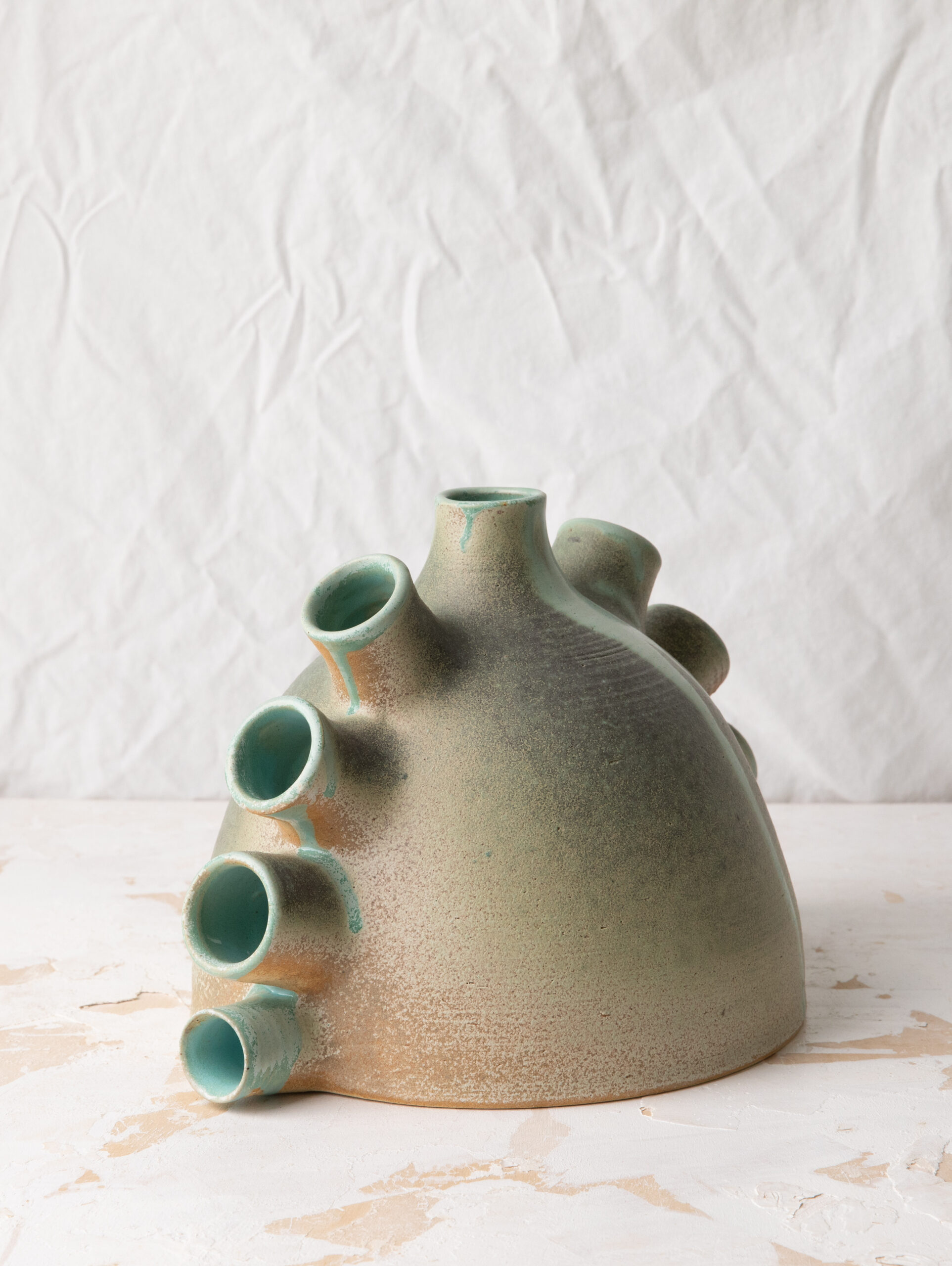
“Ascensão” é uma escultura em cerâmica que evoca a forma de um arco — estrutura de sustentação e travessia — envolvido por tubos que percorrem o seu contorno até convergirem num único tubo mais elevado, como um vértice de exalação, condensação ou ascensão. O gesto escultórico é simultaneamente arquitetónico e orgânico, técnico e poético.
Inspirada pela pintura “Natureza Morta” de Pieter Claesz, esta peça não busca apenas dialogar com uma ideia de vaidade ou moralidade sobre o tempo. Em vez disso, ela ressoa com a leitura mais ampla e histórica da obra: um retrato codificado da prosperidade e do cosmopolitismo da República Holandesa do século XVII, onde cada objeto — uma taça, uma faca exótica, um limão importado, uma porcelana chinesa — funcionava como um emblema de poder global e de sofisticação cultural.
Nesse sentido, “Ascensão” funciona como um corpo cerâmico contemporâneo que traduz o fluxo global e a complexidade cultural dos nossos tempos. Os tubos remetem às rotas comerciais e redes de circulação — de bens, pessoas, ideias e desejos — que hoje são invisíveis, mas estruturam o mundo. O tubo central mais alto simboliza tanto o cume de um sistema de acumulação e poder, quanto o seu ponto de exaustão: o lugar onde tudo converge e, talvez, colapsa.
A materialidade cerâmica reforça esse discurso: a terra moldada e queimada carrega consigo o paradoxo entre permanência e fragilidade, entre o artesanal e o industrial, entre o local e o global. A obra torna-se assim uma espécie de “natureza morta tridimensional”, onde os códigos dos estatutos sociais de hoje — invisíveis ou abstratos — são representados por uma forma que parece respirar, conter e finalmente liberar o ar.
“Ascensão” não representa objetos do luxo atual, mas evoca a estrutura invisível que os sustenta — como as pinturas de Claesz evocavam um tempo e um mundo através dos seus símbolos de abundância. No futuro, como hoje, esses códigos serão esquecidos ou transformados. A peça, então, é também uma cápsula de tempo e de silêncio, uma arqueologia do presente que fala em forma do que talvez não se possa mais nomear.
grês e vidrados mate
28 x 20 x 19,5 cm
English
Ascenção
“Ascension” is a ceramic sculpture that evokes the shape of an arch – a supporting and crossing structure – surrounded by tubes that run along its contour until they converge in a single higher tube, like a vertex of exhalation, condensation or ascension. The sculptural gesture is simultaneously architectural and organic, technical and poetic.
Inspired by the painting “Still Life” by Pieter Claesz, this piece doesn’t just seek to dialog with an idea of vanity or morality about time. Instead, it resonates with the broader, historical reading of the work: a coded portrait of the prosperity and cosmopolitanism of the 17th century Dutch Republic, where every object – a bowl, an exotic knife, an imported lemon, Chinese porcelain – functioned as an emblem of global power and cultural sophistication.
In this sense, “Ascension” functions as a contemporary ceramic body that translates the global flow and cultural complexity of our times. The tubes refer to the trade routes and circulation networks – of goods, people, ideas and desires – that are invisible today but structure the world. The highest central tube symbolizes both the summit of a system of accumulation and power and its point of exhaustion: the place where everything converges and perhaps collapses.
The ceramic materiality reinforces this discourse: the ceramic materiality reinforces this discourse: the molded and burnt earth carries with it the paradox between permanence and fragility, between the handmade and the industrial, between the local and the global. The work thus becomes a kind of “three-dimensional still life”, where the codes of today’s social statutes – invisible or abstract – are represented by a form that seems to breathe, contain and finally release the air.
“Ascension” does not represent objects of today’s luxury, but evokes the invisible structure that sustains them – just as Claesz’s paintings evoked a time and a world through their symbols of abundance. In the future, as today, these codes will be forgotten or transformed. The piece, then, is also a capsule of time and silence, an archaeology of the present that speaks in the form of what can perhaps no longer be named.
stoneware and mate glazeses
28 x 20 x 19,5 cm
Créditos Fotografias | Photography Credits: Joana Leitão
Mariana Pedro
Mariana Pedro, nascida em 1993 no Porto, é ceramista oleira. Estudou Ourivesaria na Soares dos Reis, frequentou a FBAUP, a Ar.co e formou-se em Cerâmica Artística em Córdoba e Olaria em Málaga. Após anos de formação e prática, fundou a Oficina Moínha em 2022, no Porto, onde dá aulas e workshops. No seu projecto Namira, alia tradição e design contemporâneo, explorando técnicas como a roda de oleiro e a construção manual.
English
Mariana Pedro, born in 1993 in Porto, is a ceramist and potter. She studied Goldsmithing at Soares dos Reis, attended FBAUP and Ar.co, and graduated in Artistic Ceramics in Córdoba and Pottery in Málaga. After years of training and practice, she founded Oficina Moínha in Porto in 2022, where she promotes classes and workshops. In her project, Namira, she combines tradition and contemporary design, exploring techniques such as the potter’s wheel and handbuilding.