
Colheita de Agosto
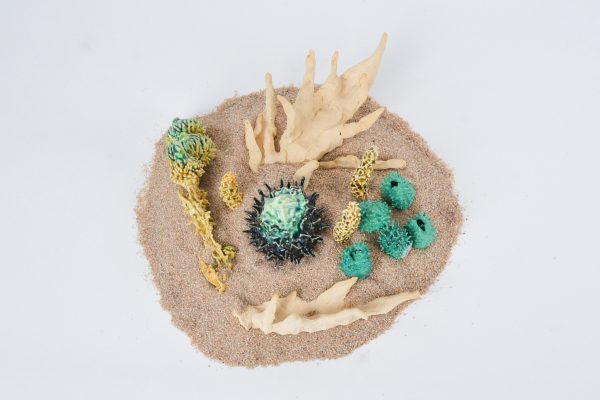
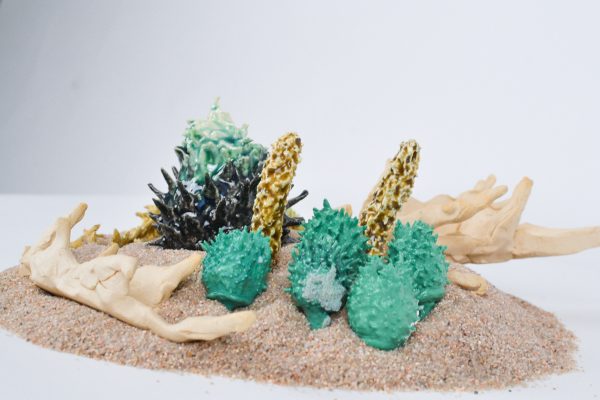
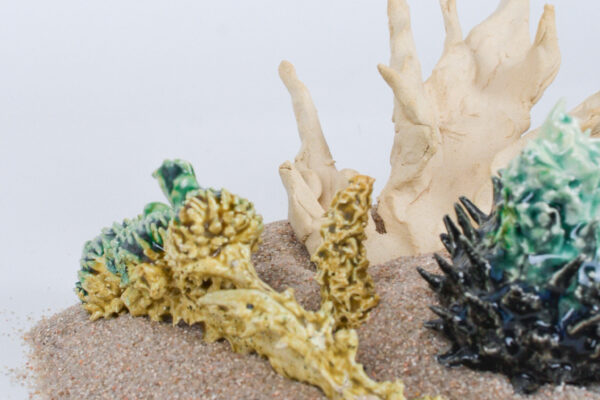
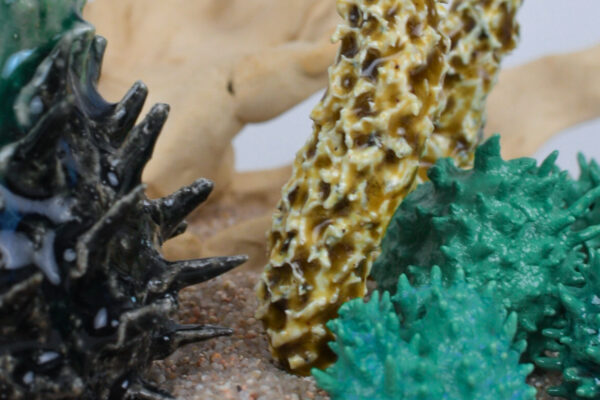
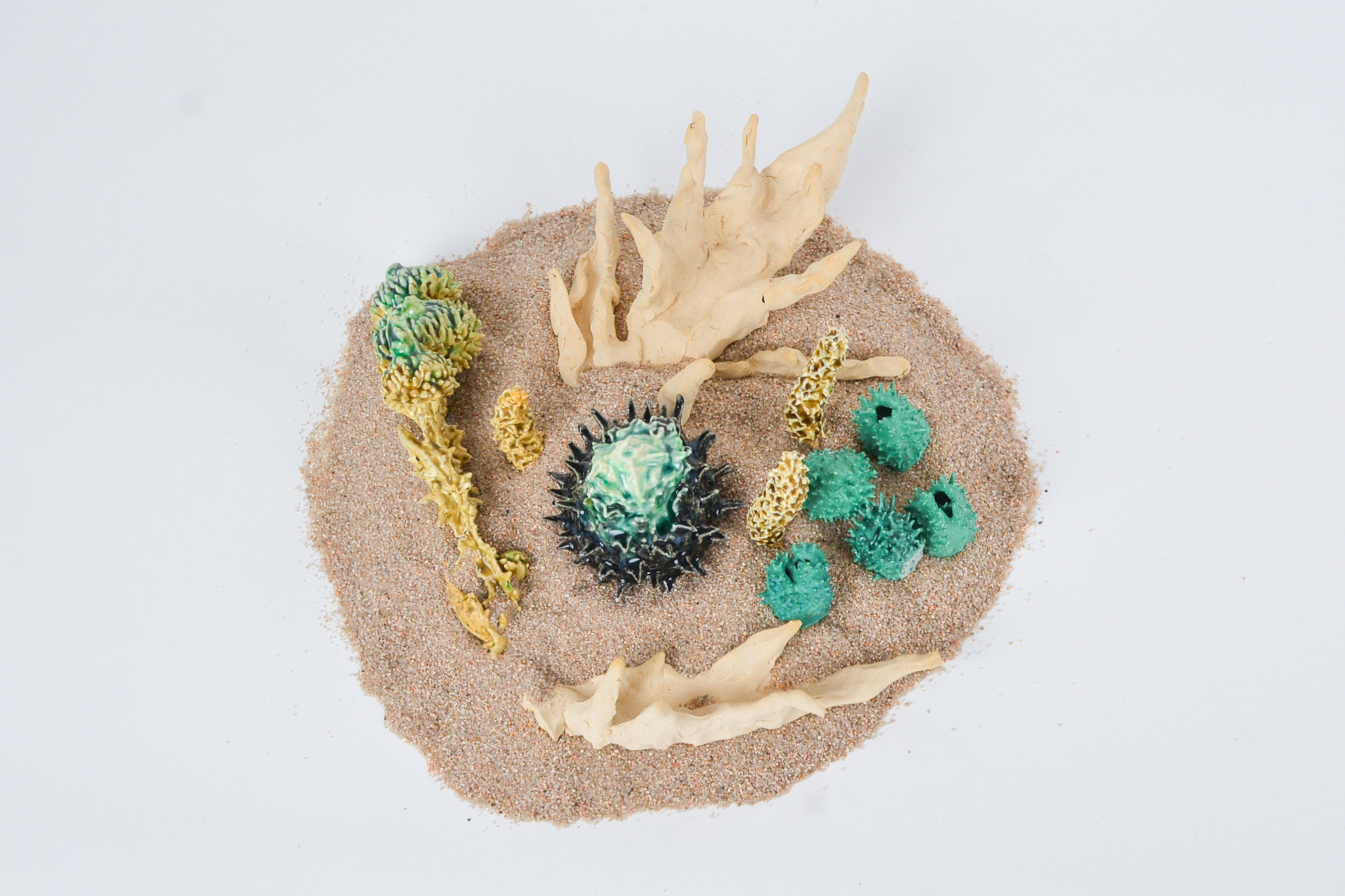
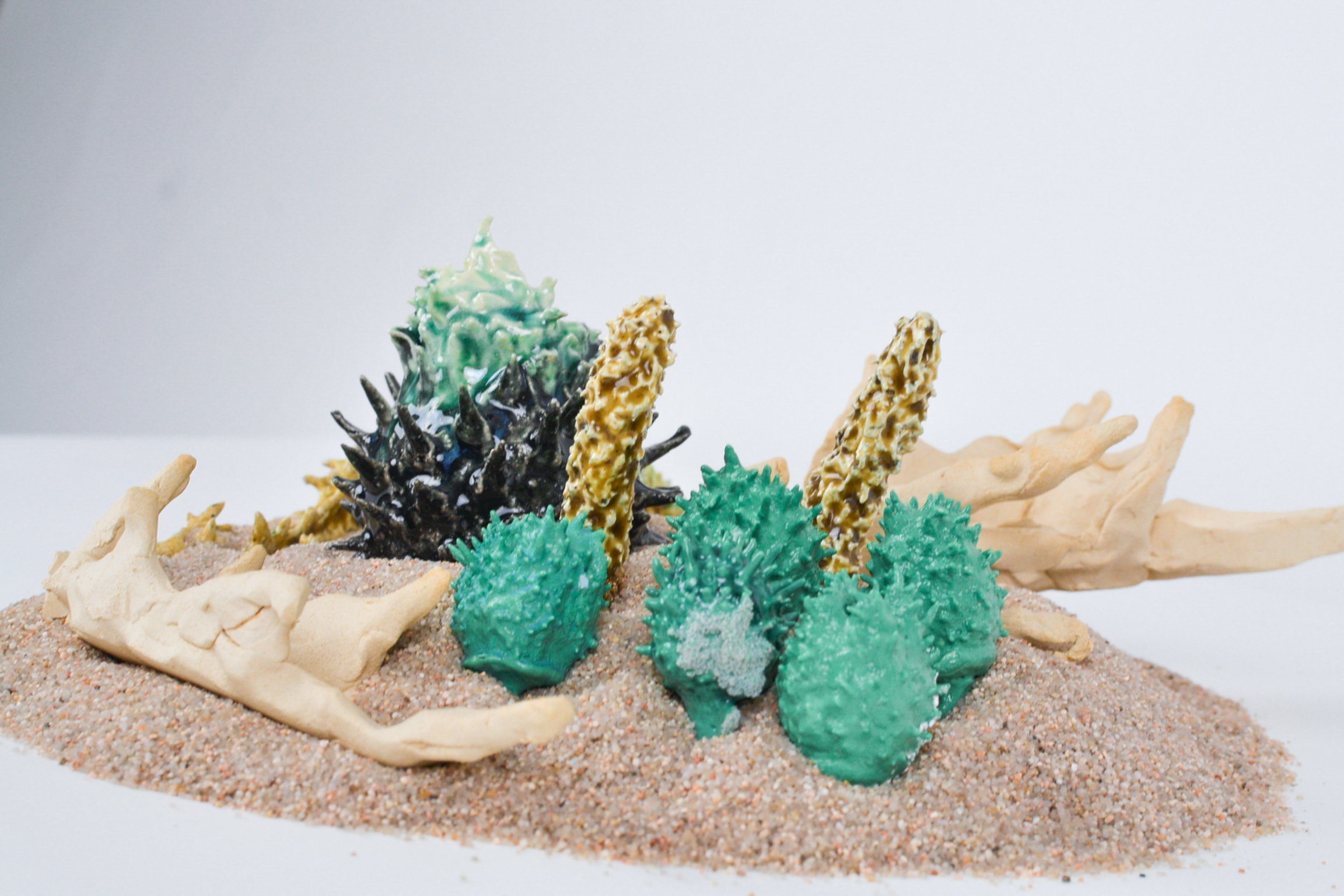
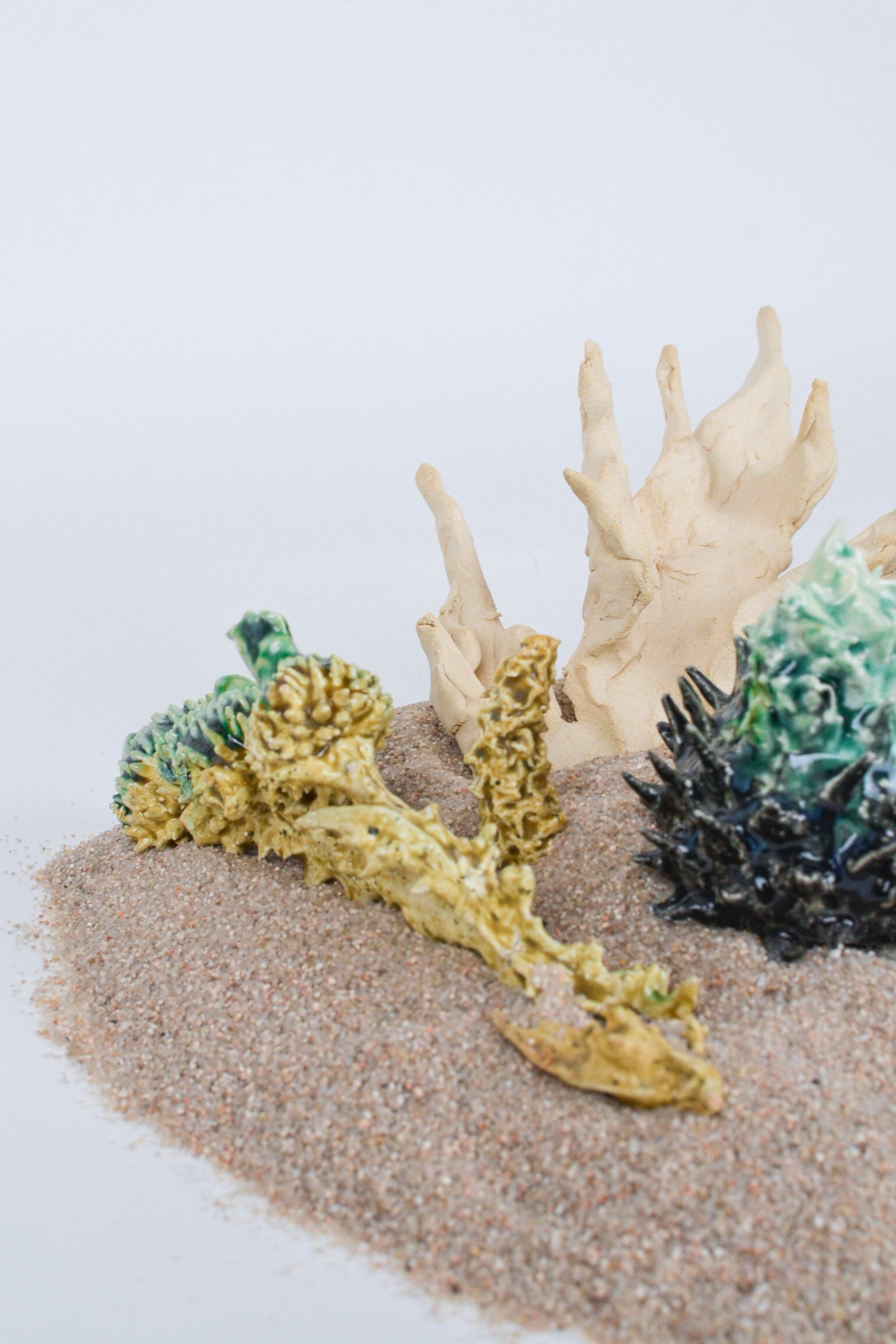
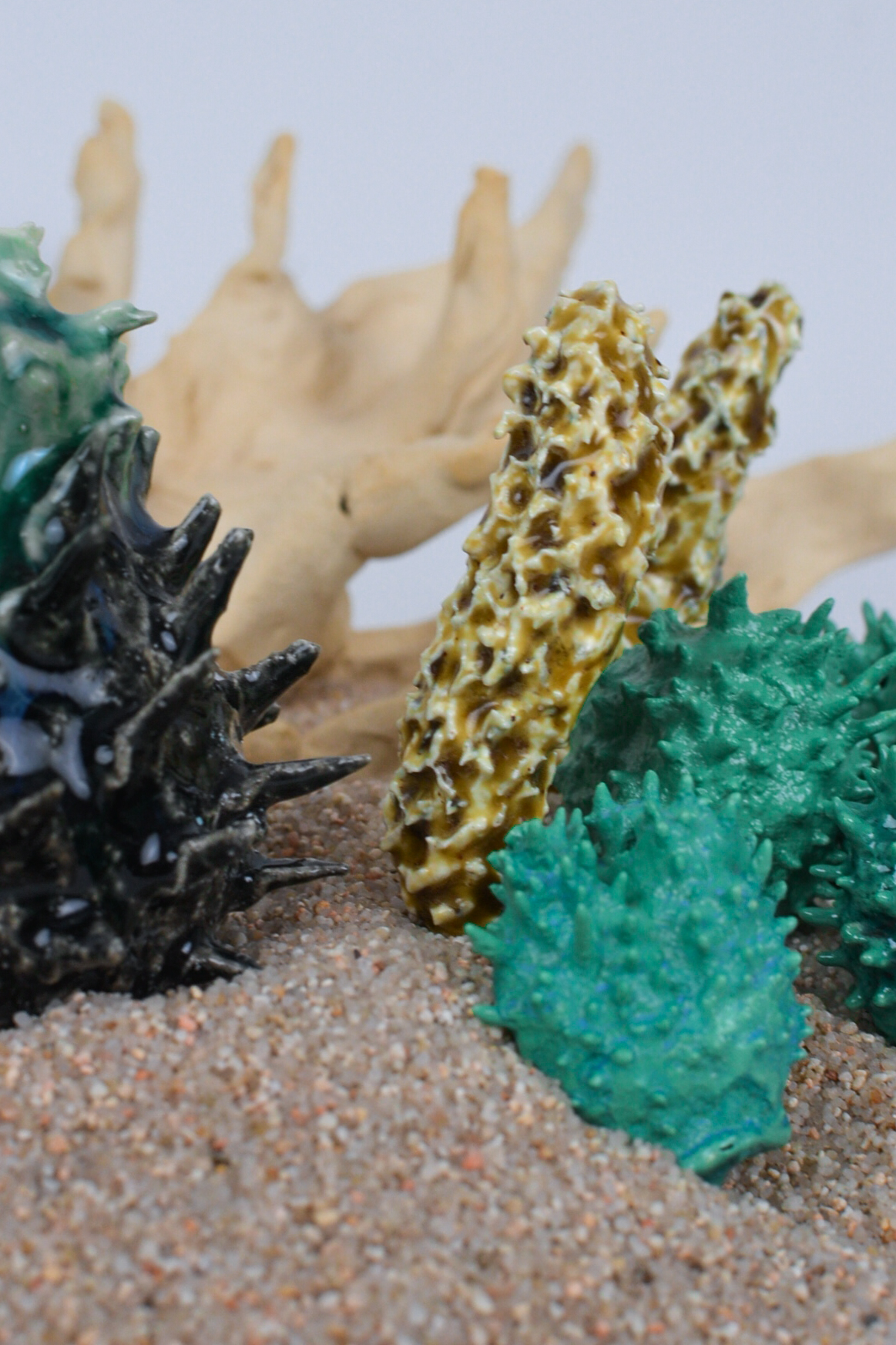
Imagina-se esta peça como um dos elementos que poderia estar sobre a mesa de Pieter Claesz, talvez esquecida num canto, entre pratos e fragmentos de alimentos. O vaso de formas simples contém elementos cerâmicos dispostos com um certo desalinho, como se tivessem sido deixados no momento exato em que algo ou alguém se ausentou. A composição evoca o contacto com a terra, o gesto da recolha, e os ciclos naturais suspensos no tempo.
Esta colheita cerâmica substitui os alimentos luxuosos e utensílios exóticos da pintura do século XVII por uma seleção simbólica de elementos vegetais. Se na obra de Claesz o limão, o salmão e a porcelana chinesa representavam o alcance do comércio global e a ostentação da época, aqui, o gesto volta-se para o essencial: o que a terra dá, o que se colhe, o que se preserva.
Ao centro, ergue-se um cardo-do-coalho (cynara cardunculus) planta associada ao homem silvestre e símbolo de resistência. Surge como uma metáfora de regresso à natureza, envolto por elementos frágeis e ornamentais, num delicado equilíbrio entre força e vulnerabilidade.
Mais do que as sobras de uma refeição, a peça evoca os vestígios de uma paisagem. Um tempo suspenso onde o gesto da colheita permanece vivo, e os fragmentos naturais se tornam testemunhos da relação entre o humano e o vegetal.
grés branco, barbotina de grés, pasta de papel e vidrados de alta temperatura
25 × 25 × 15
English
August Harvest
This piece is imagined as one of the elements that could have been left on Pieter Claesz’s table—perhaps forgotten in a corner, among plates and food remnants. The simply shaped vessel holds ceramic elements arranged with a certain disarray, as if they were left at the very moment something, or someone, departed. The composition evokes contact with the earth, the act of gathering, and natural cycles suspended in time.
This ceramic harvest replaces the luxurious foods and exotic utensils found in 17th-century painting with a symbolic selection of vegetal forms. If, in Claesz’s work, the lemon, the salmon, and Chinese porcelain represented the reach of global trade and the ostentation of the era, here the gesture turns toward the essential: what the land offers, what is gathered, what is preserved.
At the center stands a Cardoon (Cynara cardunculus), a plant often associated with the wild man and a symbol of resilience. It appears here as a metaphor for a return to nature, surrounded by more fragile and ornamental elements, creating a delicate balance between strength and vulnerability.
More than the leftovers of a meal, the piece evokes the remains of a landscape—a suspended moment in which the act of harvesting endures, and natural fragments become witnesses to the relationship between the human and the vegetal.
white stoneware, stoneware slip, paper clay, and high-temperature glazes
25 × 25 × 15
Liliana Velho
Liliana Velho (Lisboa, 1985) é uma artista visual, que tem dois corações, um em Viseu e outro em Montemor-o-Novo. Licenciou-se em Escultura da Universidade de Belas Artes de Lisboa (2009) e possui mestrado em Artes Visuais pela ARCA, Coimbra (2012) e atualmente frequenta o Doutoramento em Artes Plásticas na Faculdade de Belas Artes do Porto (FBAUP). Nos últimos anos, Liliana tem-se dedicado à escultura em cerâmica, escolhendo o barro como o material mais importante na sua prática. Também trabalha com diferentes meios, como desenho, escultura e a instalação. Desde 2015, expõe regularmente, em exposições individuais e coletivas, colaborando com outros artistas. Atualmente vive e trabalha em Viseu.
English
Liliana Velho (Lisbon, 1985) is a visual artist with two hearts—one in Viseu and the other in Montemor-o-Novo. She holds a degree in Sculpture from the Faculty of Fine Arts of Lisbon (2009) and a Master’s in Visual Arts from ARCA, Coimbra (2012). She is currently pursuing a PhD in Fine Arts at the Faculty of Fine Arts of Porto (FBAUP).
In recent years, Liliana has focused on ceramic sculpture, with clay becoming the most significant material in her practice. She also works across various media, including drawing, sculpture, and installation. Since 2015, she has exhibited regularly in both solo and group exhibitions and has collaborated with other artists. She currently lives and works in Viseu.